


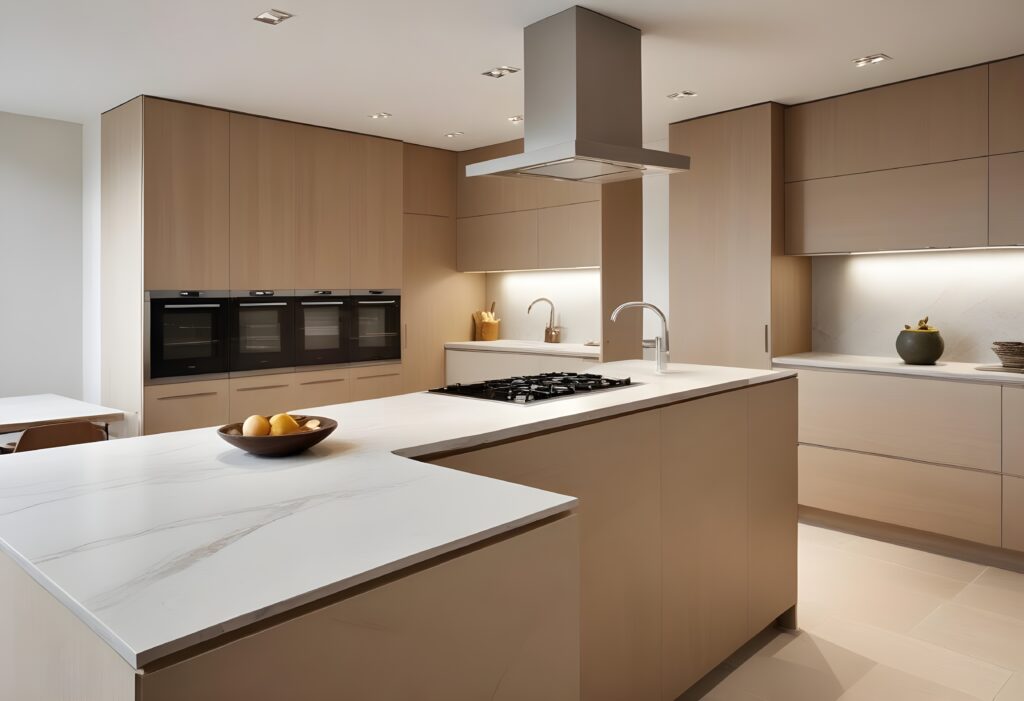
Things You Should Know Before Installing stone Countertops
stone can deliver the look of natural stone with a dense, low-porosity surface and the scale of a modern slab. It is also a precision product: the quality of the finished countertop depends on the exact slab, the fabrication plan, the support below it, and the installer who handles it. Before ordering from Lithic Slabs, use this guide to plan the project correctly.
What Is stone?
stone is made from selected mineral ingredients that are compacted and fired at high temperature. The formulation and production method vary by manufacturer, so performance should be confirmed from the technical data sheet for the exact color, finish, thickness, and intended use. Many products are made without the polymer resins used in engineered quartz, but that should still be verified rather than assumed.
Why It Works Well for Countertops
- Low porosity: liquids have little opportunity to penetrate the slab, which supports stain resistance and routine cleaning.
- Heat and UV performance: many sintered surfaces tolerate high temperatures and sunlight well, but exterior approval and care instructions are product-specific.
- Scratch and abrasion resistance: the hard surface stands up well to ordinary kitchen use, although it is scratch-resistant rather than scratch-proof.
- Large-format design: large slabs can reduce joints and create long, uninterrupted runs of veining.
- No routine sealing in most cases: unlike many natural stones, the slab surface normally does not need a penetrating sealer. Follow the manufacturer’s instructions for edges, joints, and any special finish.
Decisions to Make Before Templating
- Confirm the exact product. Ask for the technical sheet, care guide, warranty terms, slab dimensions, thickness options, and approval for the intended application.
- Choose thickness and edge details together. A thin-looking edge may be a built-up detail rather than the full slab thickness. Some profiles require more material and support than others.
- Plan seams and vein direction. Review the actual slab, not only a small sample. Decide where joints will fall and how pattern movement will continue across an island, waterfall edge, or backsplash.
- Finalize every cutout. Sink type, tap holes, hob or cooktop model, pop-up outlets, and appliance clearances should be fixed before fabrication.
- Prepare level, rigid cabinets. Cabinet runs and support structures must meet the fabricator’s requirements. Overhangs, spans, and cutout areas may need additional reinforcement.
- Use an experienced slab fabricator. Large sintered slabs require suitable handling frames, cutting equipment, adhesives, and installation methods.
Installation Risks to Plan Around
stone is hard, but thin edges and cutout corners can chip or crack if the slab is flexed, struck, or supported incorrectly. Repairs may remain visible, especially on a patterned surface. A qualified fabricator should specify corner radii, joint locations, support, handling, and the correct adhesive or reinforcement system.
- Do not schedule templating until cabinets are fixed, level, and ready.
- Keep plumbing and electrical connections accessible, but disconnected as required for installation.
- Clear a safe delivery route and confirm that the slab can pass through doors, stairs, lifts, and turns.
- Ask who is responsible for removal, disposal, appliance disconnection, final plumbing, and touch-up work.
Care After Installation
- Clean routine spills with warm water, a soft cloth, and a compatible mild cleaner.
- Use a cutting board to protect knife edges and avoid metal transfer marks.
- Use a trivet for very hot cookware unless the product manufacturer explicitly permits direct placement.
- Avoid heavy impact on exposed edges and around sink or hob cutouts.
- Use only stain-removal products approved for the exact finish; polished surfaces can have different care requirements from matte surfaces.
Beyond the Kitchen
Depending on the product rating, the same material family can be used for bathroom vanities, wall cladding, furniture, flooring, facades, and outdoor kitchens. Flooring requires a suitable slip-resistance rating, while exterior work requires confirmed UV, weather, substrate, adhesive, and movement-joint specifications.
Final Takeaway
The best stone countertop is not chosen by color alone. Match the slab’s technical properties to the application, review the full pattern, finalize details before templating, and use a fabricator who regularly works with large sintered surfaces. Explore the Marmo Series and other Lithic Slabs collections, then contact sales@lithicslabs.com for current specifications and availability.